Easy Crochet Dish Scrubber Pattern – Free Beginner Guide
A rough, nubby cotton cloth makes scrubbing cast iron pans or stubborn baked-on cheese feel much less like a chore. This project produces a firm, dense fabric that grips onto grime while remaining gentle enough for everyday glassware. Beginners often appreciate how quickly the pattern comes together, as it builds confidence with basic counting and tension control without requiring complex maneuvers. You will learn the specific alternating stitch combination that creates this scrubbing surface, transforming a simple ball of cotton yarn into a hardworking utility piece that saves money on disposable sponges every single week.
Why You’ll Love This Pattern
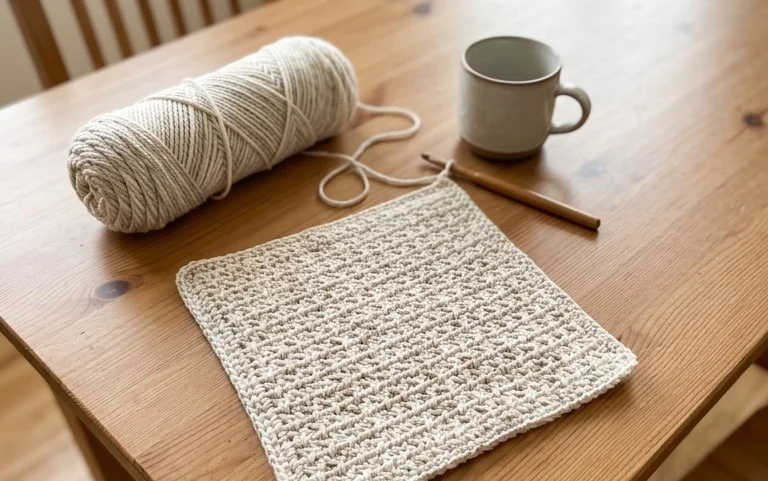
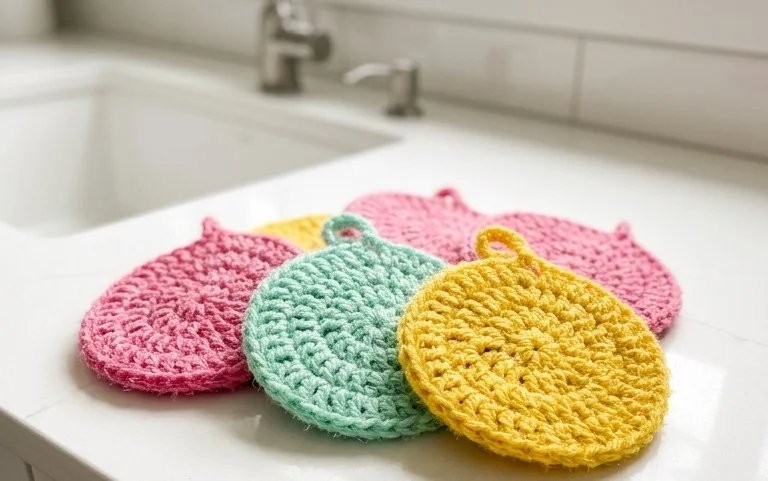
This classic crochet dishcloth works up quickly using basic stitches, making it an ideal project for practicing consistency and tension. The textured surface created by the seed stitch variation provides extra scrubbing power for kitchen chores, while the cotton fiber ensures high absorbency and durability through repeated cycles in the washing machine. Because it uses less than one skein of yarn, it is an efficient way to use up leftover cotton yarn from larger projects, providing a functional result that makes a thoughtful, handmade gift for housewarmings or holidays.
I finished this dishcloth in just one evening while watching a movie. The texture is perfect for scrubbing pots and it holds up much better than the store-bought sponges I used to buy.
— Sarah, home crafter
Pattern Overview & Skill Level
- Skill Level: Beginner
- Approximate Time: 1 to 1.5 hours
- Construction: Flat row-by-row construction worked from the bottom up.
- Finished Dimensions & Sizing: 8 inches by 8 inches.
Materials & Supplies Needed
- Yarn: Worsted weight (#4) 100% cotton yarn, approximately 75 yards per dishcloth.
- Hook Size: 5.0 mm (H-8).
- Notions: Tapestry needle for weaving in ends, pair of scissors.
- Safe yarn substitutions: You may use a cotton-acrylic blend, though pure cotton is recommended for maximum absorbency; changing fiber types will not significantly alter the size if gauge remains consistent.
Stitch Guide & Abbreviations (US Terms)
- ch = chain
- sc = single crochet
- dc = double crochet
- st(s) = stitch(es)
- sl st = slip stitch
- Seed Stitch: A pattern created by alternating single crochet and double crochet stitches across the row, then reversing the sequence in the following row to offset the texture.
Step-by-Step Pattern Instructions
Main Dishcloth
The entire piece is worked back and forth in rows. Be sure to count your stitches at the end of every row to ensure the edges remain straight.
- Row 1: Ch 29. Sc in the 2nd ch from hook, dc in next ch. Repeat [sc, dc] across until 1 st remains. Sc in the last st. (28 sts)
- Row 2: Ch 1, turn. Sc in the first dc of previous row, dc in next sc. Repeat [sc, dc] across until 1 st remains. Sc in the last st. (28 sts)
- Rows 3-28: Repeat Row 2 until the piece measures 8 inches long.
- Finishing: Fasten off, leaving a 6-inch tail. Use your tapestry needle to weave the tail securely back and forth through the stitches on the backside of the cloth to prevent unraveling.
Care & Washing Instructions
- Machine wash on a warm setting with similar colors to prevent dye transfer.
- Tumble dry on low heat or lay flat on a clean towel to retain the original square shape.
- If the corners begin to curl after washing, gently steam or block them while damp to flatten the edges.
Pro Tips & Common Mistakes to Avoid
- Consistent Tension: Because you are alternating single and double crochets, your tension may naturally tighten or loosen. Pay close attention to your hook movement, especially when switching between the taller dc and the shorter sc.
- Counting Stitches: Use a stitch marker in the first stitch of every row. This prevents you from accidentally skipping the final stitch, which is a common error that causes the edges to slant inward.
- Invisible Weaving: When finishing, weave your ends in at least three different directions. This creates a secure anchor point that will not loosen when the cloth is scrubbed against dishes.
- Adjusting Size: To make a larger or smaller cloth, simply change your starting chain to any odd number. Note that a larger size will require additional yardage, so ensure you have enough yarn before starting.
Frequently Asked Questions
Can I use a different weight of yarn for this pattern?
You can use DK or bulky weight yarn, but you will need to adjust your starting chain and row count to reach your desired 8-inch width. A lighter yarn will create a thinner cloth, while a heavier yarn will result in a thicker, chunkier texture.
Is this pattern suitable for someone who has never crocheted before?
Yes, this is an excellent starter project. It only requires knowledge of how to create a foundation chain and the two most common crochet stitches, making it perfect for building foundational skills.
How do I prevent the edges from becoming uneven?
Uneven edges usually result from missing the first or last stitch of a row. Always chain one before turning, and count your stitches after every row to ensure you still have 28 stitches total.
Can I sell the dishcloths I make from this pattern?
Yes, you are welcome to sell physical items made from this pattern. Please credit the original design if you list them in an online shop or at a craft fair.
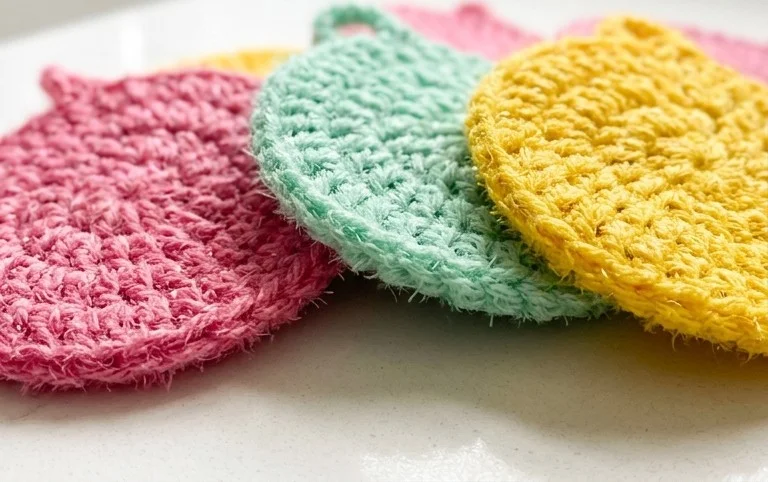
Your new handmade scrubber provides a solid grip and deep texture that commercial versions simply cannot match. You can easily adjust the scale by adding more foundation chains for a larger surface or choosing a variegated cotton yarn to hide stains during heavy kitchen duty. Seeing how these perform in your own home is rewarding, so consider snapping a photo of your finished work to share with other makers. Please browse the rest of the site for more simple utility designs to stock your kitchen drawers.