Free Crochet Ornament Applique Pattern & Video Tutorial
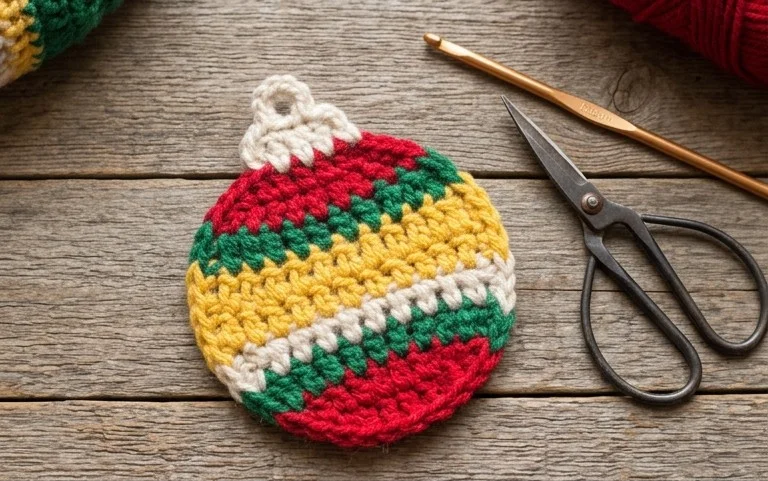
A small, circular crochet ornament brings a festive touch to a holiday tree or a handmade gift wrapping. These lightweight pieces have a flat, defined shape that holds up well when handled or stored. The stitch pattern relies on simple rounds that grow quickly from the center, making it a soothing project to finish while waiting for the kettle to boil or sitting on the porch. You will master the basic increases and the slip stitch join to create a seamless finish. This project suits anyone who wants to decorate their home with yarn scraps in a short amount of time.
Why You’ll Love This Pattern
The Classic Crochet Dishcloth is a functional staple that works up in less than an hour, making it an ideal project for using up small amounts of leftover cotton yarn. The textured stitch pattern creates a scrubby surface that excels at cleaning kitchen surfaces while remaining soft enough for hand-washing dishes. Because it relies on basic stitch combinations, you can work on this project while listening to a podcast or watching television without needing to track complicated charts. Experienced makers appreciate the predictable rhythm of the repeat, while new crocheters find it builds confidence in maintaining even tension across flat pieces.
I managed to whip up three of these in a single afternoon using scraps from my stash. They hold their shape perfectly even after being tossed in the washer a dozen times.
— Sarah, home crafter
Pattern Overview & Skill Level
- Skill Level: Beginner
- Approximate Time: 45 to 60 minutes per dishcloth
- Construction: Worked in flat rows, starting with a foundation chain and ending with a simple border
- Finished Dimensions & Sizing: Approximately 8 inches by 8 inches
Materials & Supplies Needed
- Yarn: Worsted weight (#4) 100% cotton yarn, approximately 50 yards per cloth.
- Hook Size: 5.0 mm (US H-8)
- Notions: Tapestry needle for weaving in ends, scissors, and a measuring tape.
- Safe yarn substitutions: You may use a cotton-acrylic blend for a softer feel, though 100% cotton is preferred for its natural absorbency and heat resistance. Note that synthetic blends may hold onto grease more than pure cotton.
Stitch Guide & Abbreviations (US Terms)
- ch = chain
- sc = single crochet
- dc = double crochet
- st/sts = stitch/stitches
- sl st = slip stitch
- YO = yarn over
- Seed Stitch: A pattern created by alternating sc and dc in the same row, then placing the opposite stitch in the next row to create a bumpy, durable texture.
Step-by-Step Pattern Instructions
This dishcloth is worked from the bottom up in a repeatable sequence that creates the textured fabric.
- Foundation: Chain 29.
- Row 1: Sc in the 2nd ch from hook and in each ch across. (28 sts)
- Row 2: Ch 1, turn. *Sc in the first st, dc in the next st. Repeat from * across until 1 st remains, sc in the last st. (28 sts)
- Rows 3 through 24: Repeat Row 2. Ensure that you are placing a sc into a dc from the previous row and a dc into a sc from the previous row to maintain the seed stitch pattern. (28 sts)
- Border: Do not fasten off after Row 24. Ch 1, turn. Work 1 row of sc evenly around all four sides of the square, placing 3 sc in each corner to allow the piece to lay flat. Join with a sl st to the first sc.
Finishing
Fasten off your yarn, leaving a 6-inch tail. Use your tapestry needle to weave the end securely into the back of the work, moving the needle in different directions to ensure it does not unravel during heavy use or laundering.
Care & Washing Instructions
- Machine wash on a warm, gentle cycle to remove oils and food particles.
- Tumble dry on low heat or lay flat on a drying rack to maintain the original square shape.
- If the cloth looks slightly misshapen after drying, dampen it lightly with water and pull it into a square on a flat surface to block it back into position.
Pro Tips & Common Mistakes to Avoid
Maintain consistent tension by holding your yarn with a steady grip, which prevents the dishcloth from becoming too loose or stiff. Use a stitch marker in the first stitch of every row to ensure you do not accidentally skip the final stitch, which is a common error that causes the edges to slant inward. If you want to make the cloth larger, simply increase your foundation chain by any even number, though keep in mind that you will require more than 50 yards of yarn. Weave your ends in by catching the back loops of the stitches, which hides the tail within the bulk of the fabric rather than letting it sit on the surface.
Frequently Asked Questions
Can I use a larger hook for this pattern?
Yes, using a larger hook will result in a drapier, looser dishcloth. However, be aware that a larger hook size may require more yarn and result in a less effective scrubbing texture.
Is this pattern suitable for complete beginners?
Absolutely. It only requires two basic stitches and involves straight edges, which helps you practice keeping your stitch counts consistent without the pressure of complex increases or decreases.
Can I sell the finished items made from this pattern?
You are welcome to sell finished items made from this pattern as long as you credit the design. Always check the specific terms of use provided by the creator if you are sourcing this for a small business.
Why is my square curling at the edges?
Curling usually happens if your tension is too tight or if you are skipping stitches at the end of the rows. Ensure you have 28 stitches in every row and consider blocking the finished piece by steam-pressing it lightly under a damp cloth.
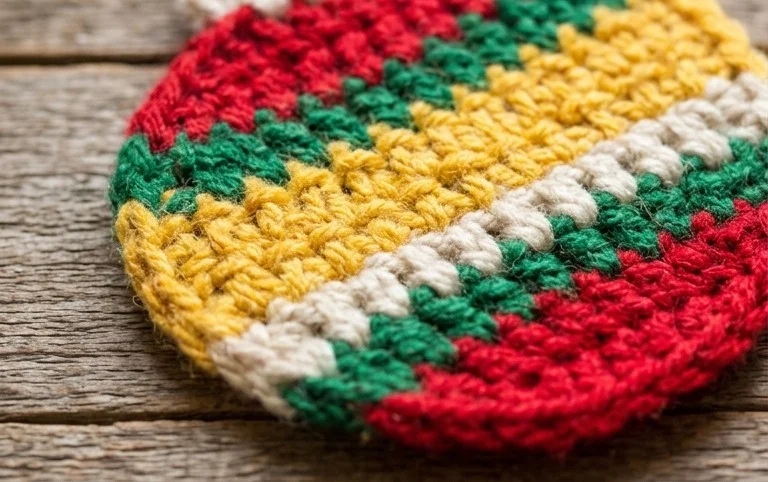
Your finished ornament adds a personal touch to your seasonal decor and creates a cozy atmosphere in any room. You can switch to a metallic thread if you want a subtle shimmer or use a chunky wool for a larger, bold wall hanging piece. Seeing your completed work is always rewarding, so share a photo on social media to show how your colors turned out. Feel free to browse the blog for more small crochet motifs and seasonal projects to fill your afternoons with simple, productive making.